Advanced oils, lubricants
and treatments since 1887
Main Switchboard: +44 (0)1484 713201
Technical Support: +44 (0)1484 475060
Advanced oils, lubricants
and treatments since 1887
Main Switchboard: +44 (0)1484 713201
Technical Support: +44 (0)1484 475060
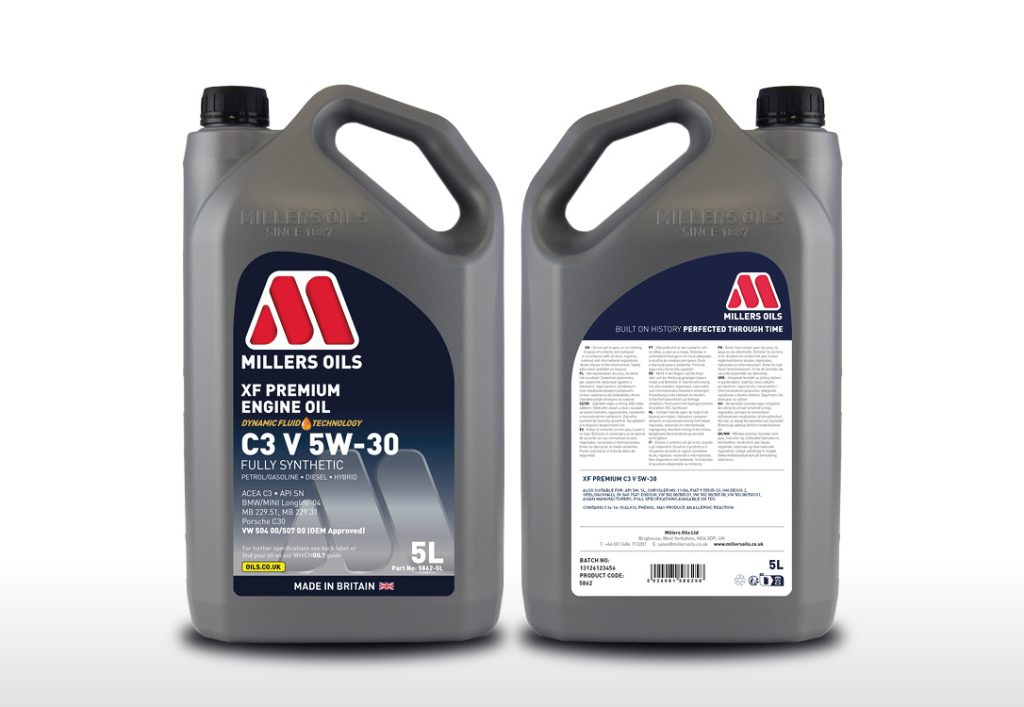
Choosing the correct engine oil is essential for maintaining performance, efficiency, and long-term engine protection. But with so many numbers, specifications, and symbols on a bottle, understanding what it all means can be confusing.
An engine oil label contains important information about the oil’s performance, compatibility, and intended application. Knowing how to read it can help you make an informed decision about whether you’re using the right lubricant for your vehicle.
The front label is designed to give you a quick overview of the product and whether it is suitable for your vehicle. It typically includes the brand logo, product range, product type, technology used, and key performance information.
Most importantly, it includes the product name and viscosity grade, helping identify whether the oil may be suitable for your engine. For example:

XF Premium C3 V 5W-30
This can be broken down into several elements:
The viscosity grade is defined by the SAE (Society of Automotive Engineers) classification system and explains how the oil performs at different temperatures.
In a grade such as 5W-30:
Choosing the correct viscosity is important for both engine protection and efficiency.
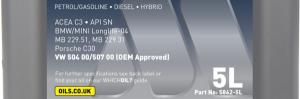
Engine oil labels also display the industry specifications and manufacturer approvals the product meets. These help confirm compatibility with specific vehicles and engine types, including:
Manufacturer approvals and acknowledgments are particularly important, as they confirm the oil has been formally tested and approved for use in specific vehicles.
The back label contains additional specifications as well as technical, safety, and regulatory information to help ensure the product is used, stored, and disposed of correctly. This includes multilingual precautionary statements, providing important safety and handling guidance for international markets, alongside additional technical specifications and compatibility information for more detailed reference. You will also find advisory CLP elements, which are legally required safety warnings relating to product handling, storage, and potential hazards, as well as recycling symbols that support responsible disposal and environmental compliance.
Further information on the back label includes manufacturer contact details should technical support or product guidance be required, a batch number for full product traceability during manufacturing and distribution, and a barcode used for retail scanning, stock control, and product identification.
Understanding the information displayed on an engine oil label makes it easier to choose the correct lubricant with confidence.
If you are unsure which oil is suitable for your vehicle, always consult your vehicle handbook or use the Millers Oils WHICHOIL? lookup tool to identify the correct product. Alternatively, you can contact the Millers Oils Technical Support Team for further guidance.
More about Millers Oils


